Ukraine War Impact: Influencing Global Conflicts and Geopolitical Landscape
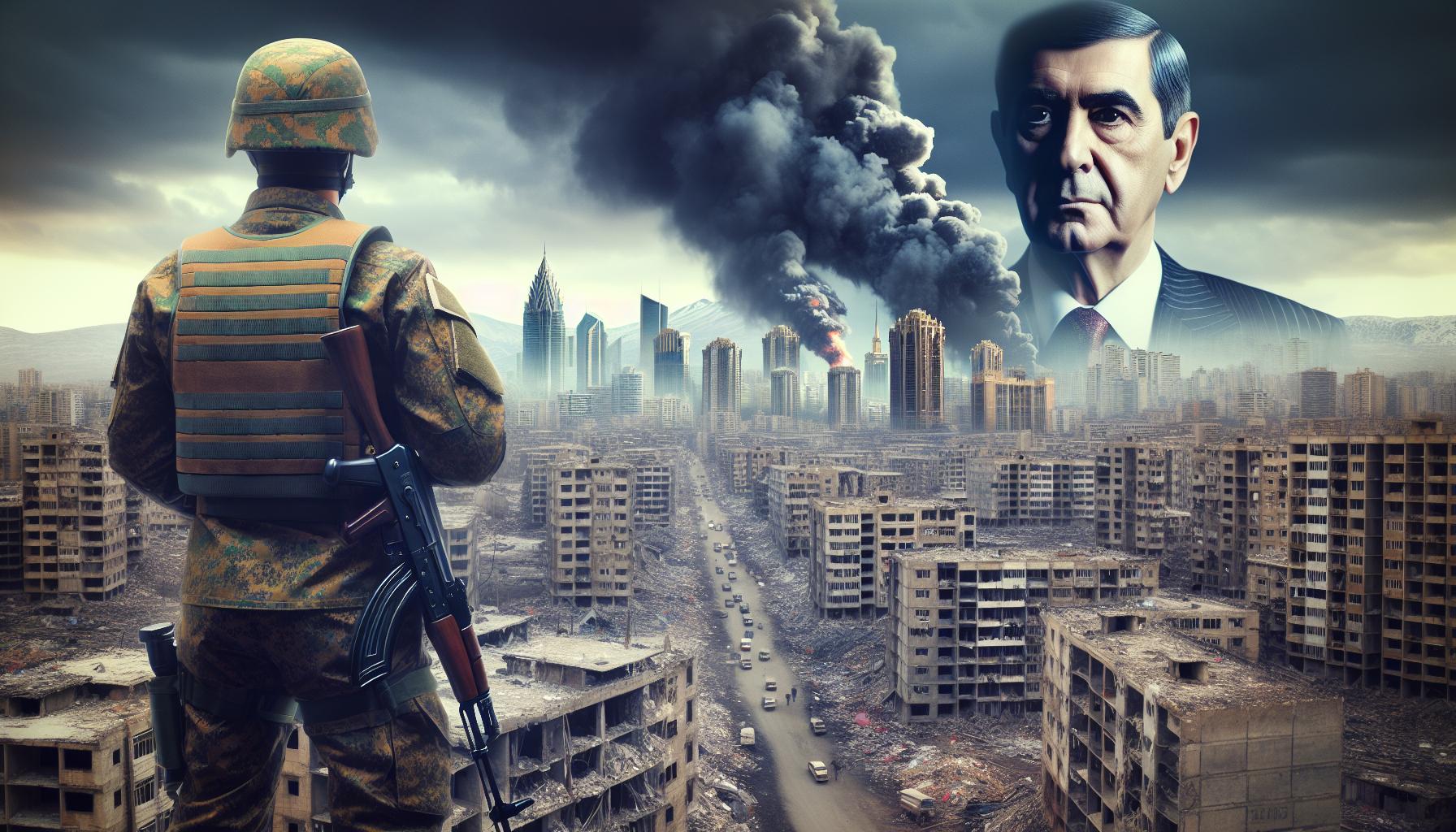
As the world's gaze is fixed on the unfolding crisis in Ukraine, we're compelled to consider the ripple effects of this conflict on global geopolitics. This war, we're afraid, isn't an isolated event. It's a complex web of actions and reactions that could potentially reshape the landscape of international relations and conflicts.
From the frosty peaks of the Himalayas to the heated sands of the Middle East, the tremors of the Ukrainian crisis are being felt far and wide. It's a stark reminder that in our interconnected world, a spark in one corner can light a fire in another. So, what does this mean for other conflicts around the globe? Let's delve in and explore the wider implications.
Contextualizing the War in Ukraine
A deep dive into the Ukraine conflict unveils a rich historical context and reveals the complex, current geopolitical state of affairs.
A Brief History
Starting with a glimpse into the past, the origins of Ukraine's unrest trace back to the dissolution of the Soviet Union. In the early 1990s, Ukraine emerged as an independent nation, shedding the communist past. This evolution came with an east-west divide among the people, sowing the seeds of conflict. For example, Crimea, a region that was historically part of Russia but transferred to Ukraine in 1954, harbored a significant portion of Russian ethnic population, leading to internal tensions and the eventual annexation by Russia in 2014.
Current Situation
Fast forward to the present, the eastern part of Ukraine continues to battle pro-Russian separatists. Donetsk and Luhansk, the two major regions affected, face ongoing violence that's disrupted the lives of millions. In 2020 alone, reports show over 3,000 ceasefire violations, reflecting the marked intensity of the struggle. Amidst this chaos, the fluctuating international relations and commitments reflect the global importance of this conflict. For instance, the changing stance of major powers like the United States and Russia on providing military aid and economic sanctions onto Ukraine demonstrates the global impact of this local conflict.
Implications of Ukraine Conflict on Global Medium

The echoes of the Ukraine conflict amplify far beyond its borders, with its influence swaying ongoing conflicts and shaping new disputes worldwide.
Influence on Ongoing Conflicts
Increased tensions in Ukraine intensify existing conflicts worldwide. For instance, strife in Syria's civil war escalates as global attention shifts towards Ukraine, leading to unfettered regional powers capitalizing on the diverted focus. The fragile peace in Mali is another case, shaken further as international peacekeeping forces refocus their efforts to a potential threat in Eastern Europe. Moreover, this shift in world focus could potentially embolden rogue states, like North Korea, strengthening their hand to advance their agendas unchecked.
Role in Shaping New Disputes
Apart from rattling ongoing conflicts, Ukraine's crisis contributes significantly to sowing seeds of new disputes across the globe. Many countries exploit the shifting balance of power during times of international crisis for territorial or political gains. For instance, China's increasing assertiveness in the South China Sea presents a case where a rival power could seize an opportunity amidst global instability. Furthermore, the Ukraine conflict may provoke undercurrents of discontent in regions with strong ethnic disputes, like the volatile Baltics or Caucasus, threatening to ignite fresh conflicts.
The War in Ukraine and Europe
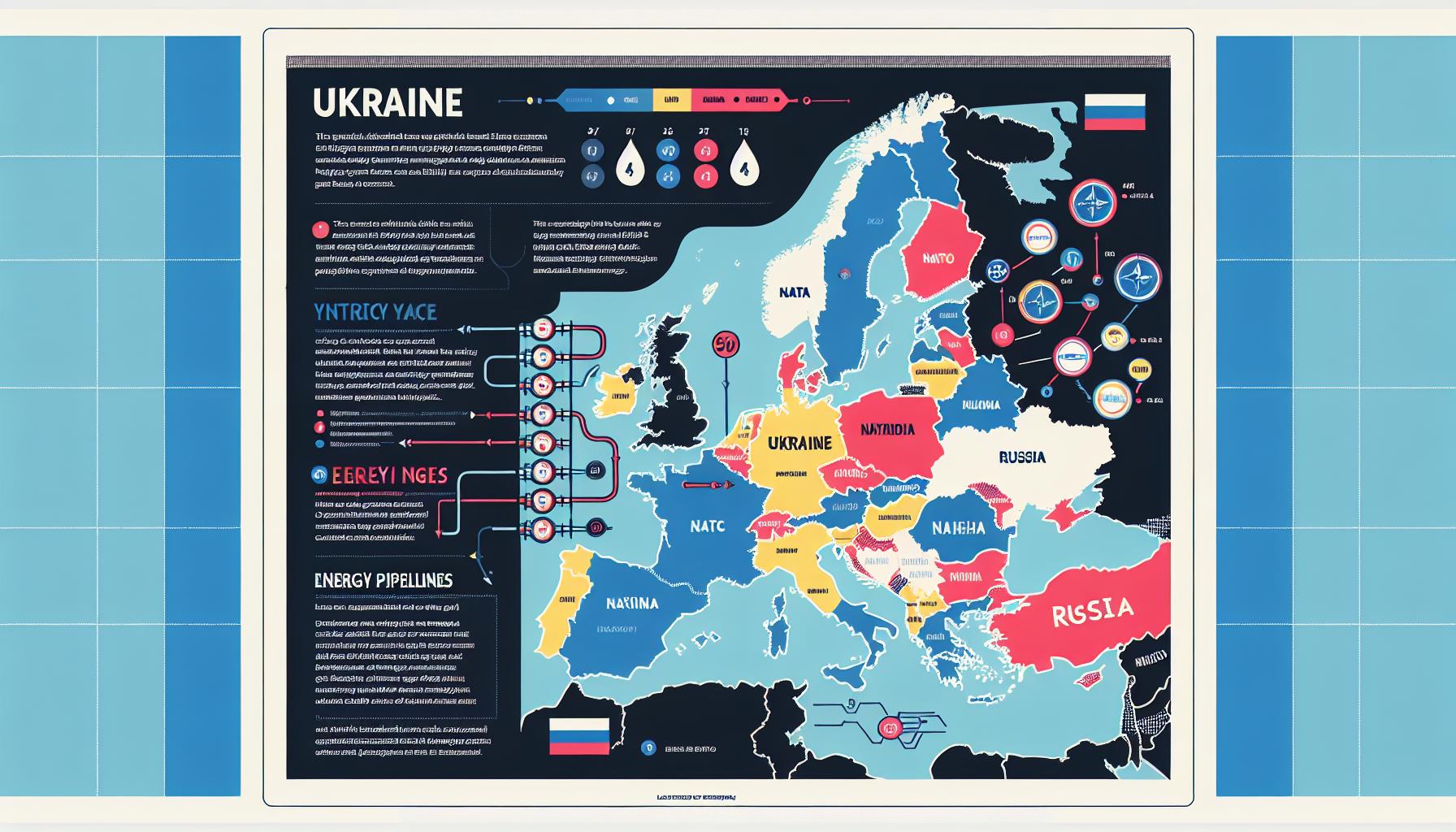
Turning our lens to Ukraine and Europe, the conflict's effects ripple outward, influencing both NATO relations and the EU's stance.
Impact on NATO Relations
NATO's relationship with Russia, previously fraught, has been further marred by the conflict in Ukraine. Russia's annexation of Crimea, against the backdrop of the Ukrainian crisis, has led to the suspension of practical civilian and military cooperation between NATO and Russia. The crisis presents an existential threat to NATO’s collective security pledge, particularly, as the alliance consists of former Soviet states. NATO's Eastern European members push for a more aggressive stance against Russia, attesting to the conflict's influence on intra-NATO politics. Also, the war provides credence to NATO's raison d'être, justifying its strategic defense posturing, particularly in Eastern Europe.
EU's Response and Implications
Conversely, the European Union's (EU) response to the Ukraine crisis has reiterated its soft power approach, focusing on economic sanctions rather than military intervention. While the EU's sanctions have had an economic toll on Russia, critics argue their effectiveness in changing Russia's behavior remains debatable. The conflict's impact reaches beyond economic measures, too. Europe's gas dependency on Russia complicates their relationship, giving Russia a lever of influence over the EU. With Ukraine being a key transit country for Russian gas to Europe, the conflict raises concerns about energy security in the continent. Thus, the Ukraine war highlights the structural vulnerabilities in the EU's energy policies and incites a dialogue for diversification and self-reliance.
The Ukrainian Conflict and Asia
Ukraine's conflict is reshaping dynamics across Asia, reflecting interesting movements in diplomacy and regional conflict zones. This section delves into the Asian landscape to offer insight on how this European crisis impacts other parts of the globe.
Russia-China Bloc and Asian Diplomacy
A significant development resulting from the Ukrainian conflict has been the strengthening of the Russia-China bloc. This new bloc considerably influences Asian diplomacy. A strong thread weaved into diplomatic relations, it pushes countries towards taking sides. In Asia, the relations between these authoritarian states bear paramount importance. The stand of nations like India, Vietnam, Japan, and South Korea are intriguing, with their diplomatic affairs reflecting the broader dynamics of the Russia-China bloc, provoked by the Ukrainian conflict.
Impacts on the Korean Peninsula and the South China Sea
The crisis in Ukraine also resonates in conflict zones across Asia. Regions like the Korean Peninsula and the South China Sea remain under scrutiny, reflecting the wider implications of the Ukrainian conflict. In the Korean Peninsula, North Korea, observing the situation unfold in Ukraine, may feel emboldened. It could interpret contrasting responses from major powers as an opportunity to intensify its nuclear ambitions.
In contrast, the South China Sea situation exposes rising tensions. The Ukrainian conflict possibly amplifies territorial claims from China, escalating confrontations with Vietnam and the Philippines. The ongoing dynamics in the South China Sea, under the lenses of Ukrainian conflict, bring forth global ramifications of a dispute that's primarily European.
The extent to which the Ukrainian crisis influences these Asian fronts reveals the intertwined nature of global conflicts in the contemporary world. It underscores how a spark in one corner of the globe impacts the other, directly reshaping the geopolitical landscape.
Lessons from Ukraine for Conflict Zones
Engaging in reflections on the Ukrainian crisis, we extract vital lessons that can be applied to other conflict zones around the globe.
The Role of International Solidarity
First, Ukraine's story underscores the critical role of international solidarity in conflict scenarios. It exemplifies how global alliances can foster a more resolute stand against acts of aggression. For instance, following Russia's annexation of Crimea, multiple nations imposed sanctions on Russia as a show of solidarity with Ukraine. This collective action sent out a clear message: unilateral acts of aggression are unacceptable. Other conflict zones can learn from this scenario. A unified global stand can deter miscreants, giving credence to the power of international solidarity.
Importance of Open Communication Channels
Secondly, the war in Ukraine emphasizes the importance of open communication channels in conflict resolution. Ukraine's penchant for dialogue, even amidst heightened tensions, highlighted this lesson. Key players in the conflict, like Russia and the United States, kept communication channels open. Regular dialogues, facilitated by international mediators, played an instrumental role in establishing temporary ceasefires and reducing violence levels. Ensuring transparent and frequent dialogue among all parties is crucial in any conflict setting. It's a potent strategy to push for compromises, maintain some level of control, and gradually nudge warring entities towards peaceful resolution.
How the Ukraine Conflict is Transforming Geopolitics
The conflict in Ukraine proves to be a key influencer of geopolitics, shaping new alliances, redefining energy politics and invoking essential economic implications globally.
Shifts in Alliance Dynamics
Ukraine crisis plays a pivotal role in altering global alliance dynamics. It acts as a springboard for the strengthening of the Russia-China partnership, an axis evolving into a significant counterbalance to Western powers.
Along with this, the conflict stimulates shifts in other geopolitical blocs too. For instance, NATO's reinforced commitment to collective defense in light of Russia's aggressive actions provides a clear example. Ukraine's crisis signals regional powers to reconsider their alliance strategies, protecting their interests amid changing geopolitical currents.
Energy Politics and Economic Ramifications
Ukraine conflict takes center stage in dictating energy politics. It's the crucible for stress-testing Europe's energy reliance on Russia, instigating an urgent search for alternative energy sources. The tug-of-war over control of gas pipelines becomes a chess game of power, influence, and diplomacy.
Additionally, the crisis brings profound economic implications. These stretch from immediate cost escalations due to military action to long-term impacts, such as potential realignments in global trade patterns. Ukraine, with its strategic position and rich resources, holds potential for becoming a significant locus of economic destabilization – or resilience – depending on the future trajectory of the conflict.
Conclusion
We've seen how the Ukraine crisis isn't just a local issue but a global game-changer. Its ripple effect touches conflicts from Syria to North Korea, reshaping the geopolitical landscape. The strengthening of Russia-China ties, NATO's renewed commitment, and the shifting dynamics in Asia are all testament to its far-reaching influence. Energy politics are being redefined, and the search for alternative sources intensifies as Europe's reliance on Russia comes under scrutiny. Economically, the crisis carries potential for both destabilization and resilience, depending on the conflict's trajectory. Ultimately, the Ukraine crisis underscores the interconnectedness of global conflicts and how one region's turmoil can echo across the world. It's a stark reminder that in our globalized world, no conflict is an isolated event.
How has the Ukraine crisis influenced global conflicts?
The crisis in Ukraine has interconnected global conflicts like the violence in Syria, Mali and impacted potential rogue states like North Korea. These interconnected events highlight the broad consequences of the Ukrainian crisis worldwide.
What are the implications of the Ukraine conflict in Asia?
The conflict in Ukraine has reshaped dynamics in Asia, particularly strengthening the Russia-China bloc. This change impacts Asian diplomacy significantly and heightens tensions in conflict zones, potentially emboldening North Korea and escalating tensions in the South China Sea.
How is the Ukrainian crisis reshaping geopolitics?
The Ukrainian crisis has affected geopolitics by influencing new alliances, redefining energy politics, and invoking economic implications globally. This impact results in a shift in alliances like strengthening the Russia-China partnership and reinforcing NATO's commitment to collective defense.
What are the economic implications of the conflict?
The crisis brings profound economic implications, from immediate cost escalations due to military action to potential realignments in global trade patterns. Ukraine's strategic position holds the potential for economic destabilization or resilience based on the conflict's future trajectory.
How does the conflict dictate energy politics?
The conflict influences energy politics by stressing Europe's energy reliance on Russia, prompting a search for alternative sources. This shift is significant, given the critical role energy plays in geopolitics and global economy.